Herb Library First aid

Plantago major

Plantain Leaf

The broad-leaved weed in every lawn and crack in the pavement, and the first herb most people should learn. Plantain is a drawing, cooling, tissue-knitting leaf that works on stings, bites, splinters and grazes within minutes — and it is effectively impossible to hurt yourself with.

Bites & stings Grazes Very safe

The rule that matters

Chew the leaf. Put it on. That's the whole method.

The traditional field method for a nettle sting or a bee sting is to chew a plantain leaf briefly to bruise it, then hold it against the skin. The allantoin and mucilage cool and soothe, and the effect is fast and noticeable. It is the one herbal remedy you can genuinely use standing in a field with no preparation at all. Wash it first if you can.

What it is used for

Drawing, cooling, knitting

Plantain works through two mechanisms and both are easy to understand. First, it is a demulcent: the leaf is full of mucilage that becomes slippery when wet, and that coating soothes irritated tissue on contact. Second, it contains allantoin, the same compound found in comfrey, which promotes cell proliferation and tissue repair. Together that makes it a cooling soother with a mild healing effect underneath.

On skin, this is why it works so well on insect bites — the mucilage cools the hot, itchy inflammation immediately while allantoin does the repair work. It is also why a chewed leaf draws a splinter or a thorn: applied moist and covered, it softens the tissue around the object and the inflammation that would have made extraction painful settles down.

Internally, plantain is used for the same demulcent reasons — a dry tickling cough, an irritated stomach, and mouth ulcers. It is milder than marshmallow or slippery elm for this purpose, but it is far more available: you can pick it from a lawn. The tea is bland and slightly grassy, which makes it easy to combine with better-tasting herbs.

There is one more well-established traditional use worth noting: plantain seed husk, psyllium, is the same genus and is one of the most reliable bulk-forming laxatives there is. That is a different preparation — the seed rather than the leaf — but it is the same plant family doing what it does, and it is the one plantain use with strong clinical evidence behind it.

Best use

Bites, stings, grazes, splinters. Applied as a fresh bruised leaf or a cooled wash.

Why it works

Mucilage soothes on contact; allantoin supports repair. Two simple, well-understood actions.

The taste

Bland, grassy, faintly earthy. The most inoffensive tea in the library.

Dose & method

One tablespoon of fresh leaf or one teaspoon dried, per cup — or just chew a leaf.

For a tea, steep fresh or dried leaf for ten minutes; the mucilage comes out best in warm rather than boiling water. For a poultice, chew or crush a clean fresh leaf until it is wet and bruised, apply to the bite or graze, and hold it there for five to ten minutes. For a splinter, apply a moist poultice and cover it overnight — the tissue softens and it often comes out easily the next day. For a wash, make a strong tea, cool it, and bathe the area.

Where not to pick it

Plantain grows where people and dogs are. Avoid verges beside busy roads, lamp posts, popular dog-walking routes and anywhere that has been sprayed. Wash anything you pick, and if you are in any doubt about the ground, use a bought dried leaf for the tea and keep the fresh-leaf method for places you know.

Not the banana

The plantain you eat fried in the Caribbean is a completely different plant — a fruiting Musa, related to the banana. This plantain is a flat rosette of broad ribbed leaves with a spike of tiny green flowers. Nothing on this page applies to the fruit, and this page's plant is not a food crop.

Safety

One of the safest herbs here. Plantain has no significant toxicity and no meaningful drug interactions. It is used in pregnancy in many traditions, though as always, mention it to your midwife.

Medication absorption. Like all mucilage herbs, it can slow the absorption of tablets taken at the same time. Leave two hours between a strong plantain tea and any medication.

Anaphylaxis. A sting that causes swelling of the face or throat, difficulty breathing or a widespread rash is an emergency. Do not apply a leaf — call emergency services. A poultice does not touch anaphylaxis.

Signs of infection. A bite or graze that becomes hot, spreading, or produces pus is past the point where a plantain leaf is the answer. See a doctor — and note that tick bites with a spreading rash need assessment for Lyme disease.

Picking hygiene. Do not put a leaf in your mouth from a place dogs use. Use clean water to bruise it instead if you have any.
A note on how to read this

This article is educational. It describes traditional use and the known constituents of plantain — it is not medical advice. A first-aid leaf is for minor injuries; anything spreading, hot or accompanied by fever needs a clinician.

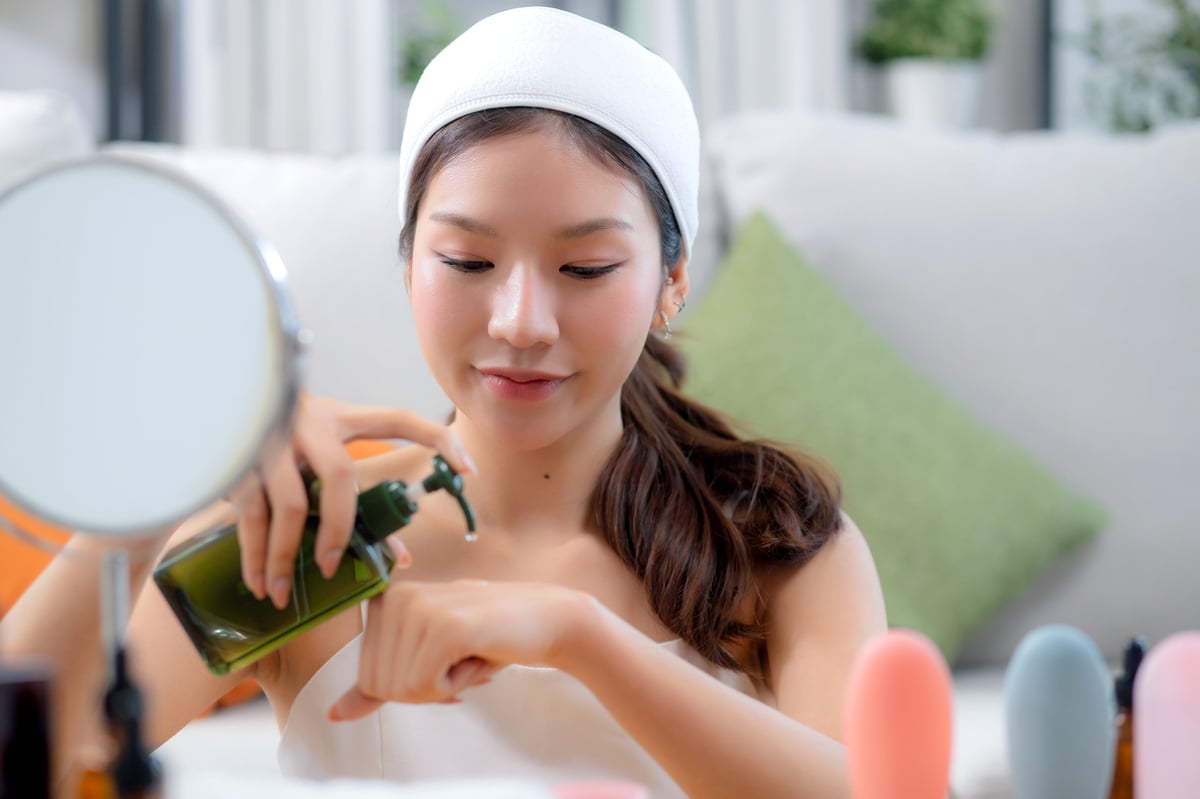
Woman applying lotion to her hands in a mirror, part of a daily skin repair routine

A leaf is an incident. Skin is a pattern.

For a bite, pick a leaf. For skin that keeps breaking down, look wider.

Plantain is the best first-aid herb in this library and there is no reason to replace it for that — a bruised leaf on a sting works within minutes and costs nothing. The distinction worth drawing is between an incident and a pattern.

If your skin is repeatedly itchy, dry to the point of cracking, or slow to heal in the same places over and over, you are not short of a poultice. You are short of a barrier that holds. That is a daily, unglamorous job: a plain moisturiser, applied to damp skin, twice a day, with nothing extra on top of it.

Healing slowly in the same spot? Recurrent breaks in the same skin, or wounds that take weeks, are worth a doctor's look — particularly on the lower legs. That is not a herb problem.

See the repair & barrier formula

Partner link — we may earn a commission, at no extra cost to you.

Season & harvest

April to October, and often beyond

Plantain is a perennial that keeps a rosette of leaves through most of the year, so the leaf is available for far longer than a seasonal herb. The best material is young and fresh, from spring through early summer — older leaves become tough, stringy and bitter as the flower spike rises.

Pick individual leaves rather than the whole plant so the rosette continues. It regrows quickly and it is abundant, which makes it one of the very few herbs where harvesting carries no conservation concern. Dry it quickly in a warm, dark place; the leaf goes brown and loses its green if dried slowly.

J F M A M J J A S O N D

Harvest: April – October

When to stop

Four reasons to stop

  • Swelling of the face or throat, or trouble breathing — call emergency services.
  • A bite or graze that is spreading, hot or producing pus.
  • A tick bite with a spreading rash — get assessed for Lyme disease.
  • You cannot identify the leaf with certainty. Do not chew an unknown plant.